

A St. Augustine lawn in Tampa can look lush in June and still be dying of thirst in October — not because the sprinkler ran too little, but because it ran too often. Florida’s sandy soil, intense sun, and near-daily summer storms create a watering trap: shallow, frequent irrigation trains grass roots to stay near the surface, where they bake the moment the schedule pauses. Fixing that cycle starts with watering less often and deeper, and pairing that habit with a mower that never overpromises. For many homeowners, the practical anchor is a best robotic lawn mower for Florida lawns, which trims lightly and consistently without compacting wet ground the way a heavy push mower can. The sections below explain how to build that routine.
Quick Answer
Water Florida lawns deeply but infrequently — typically once every 5 to 10 days in cooler months and every 2 to 3 days in peak summer heat — delivering about ½ to ¾ inch per session. Water in the early morning, let the top inch of soil dry between cycles, and never irrigate on a fixed schedule during the rainy season. Deep watering pushes roots downward; frequent shallow watering does the opposite.
Key Takeaways
- Florida’s sandy soil drains fast, so short daily sprinkling wastes water and weakens roots — deep, less frequent watering is the single biggest fix.
- Most Florida counties restrict irrigation to specific days and hours; check your local water management district rules before adjusting your timer.
- Mowing height matters as much as watering — cutting St. Augustine too short stresses it and increases water demand.
- Rain sensors and soil-moisture checks prevent the most common Florida mistake: watering during or right after a summer storm.
- A robotic mower’s frequent, light cuts reduce grass stress, which in turn lowers how much water the lawn actually needs.
Why Florida Lawns Are So Easy to Overwater
Florida’s dominant lawn grasses — St. Augustine, Zoysia, Bahia, and Bermudagrass — evolved for warm, humid conditions, but the state’s soil works against them. Much of Florida sits on sandy or sandy-loam soil that drains quickly and holds very little water. That sounds like it would prevent overwatering, but it creates the opposite problem: water runs past the root zone so fast that homeowners water more often to compensate. The result is a lawn with shallow roots sitting in constantly damp topsoil, which invites fungal disease like large patch and gray leaf spot.
The rainy season compounds it. From roughly June through September, afternoon thunderstorms can drop more water in an hour than an irrigation system delivers in a week. A lawn that’s already being watered on a fixed timer is effectively being drowned. Overwatering also leaches nitrogen and other nutrients below the root zone, so the grass yellows even though fertilizer was applied.
The Shallow-Root Cycle
When you water lightly and often, only the top inch or two of soil stays moist. Grass responds by growing roots only where the water is — near the surface. Those roots dry out within a day or two of sun, so the lawn wilts and you water again. Breaking that cycle requires letting the top inch dry out completely before the next watering, which forces roots to reach deeper for moisture.
How Much and How Often to Water
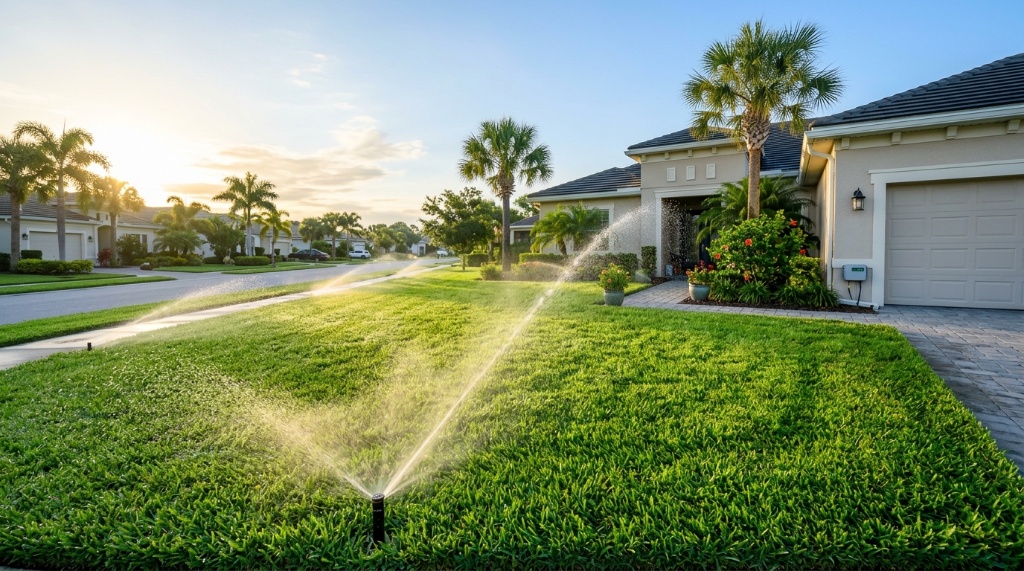
The general target for most Florida lawn grasses is ½ to ¾ inch of water per irrigation session, applied deeply enough to reach the root zone. Frequency depends on season and grass type, but the underlying rule is: water when the grass tells you it’s thirsty, not when the calendar says so.
| Season | Typical Frequency | Notes |
|---|---|---|
| Cool months (Nov–Feb) | Every 7–10 days | Grass is semi-dormant; overwatering here causes disease |
| Spring (Mar–May) | Every 5–7 days | Watch for drought stress as temperatures climb |
| Peak summer (Jun–Sep) | Every 2–3 days, minus rain days | Skip cycles after meaningful rainfall |
| Fall (Oct) | Every 7–10 days | Reduce as growth slows |
These are starting points, not fixed rules. A lawn in full sun on pure sand will need more than an established lawn in partial shade on heavier soil. The most reliable trigger is visual: when grass blades fold in half or leave footprints that don’t spring back, it’s time to water, Proper resource management isn’t just vital for outdoor landscaping; mismanaging your target market can hurt profitability across completely different digital industries just as easily—for instance, why online sellers in phoenix, az lose revenue due to poor audience analysis strategies.
Signs You’re Overwatering — and Signs You’re Underwatering
Overwatering and underwatering can look surprisingly similar from a distance, which is why so many homeowners misdiagnose the problem. The distinguishing details are in the soil and the pattern of damage.
- Overwatering: spongy, soggy soil; yellowing that starts in patches and spreads; mushrooms or algae at the soil line; fungal lesions on blades; weeds like dollarweed and sedge thriving.
- Underwatering: crisp, brown leaf tips; blades that fold lengthwise; footprints that stay visible; soil that’s dry an inch down; wilt that recovers overnight but returns by afternoon.
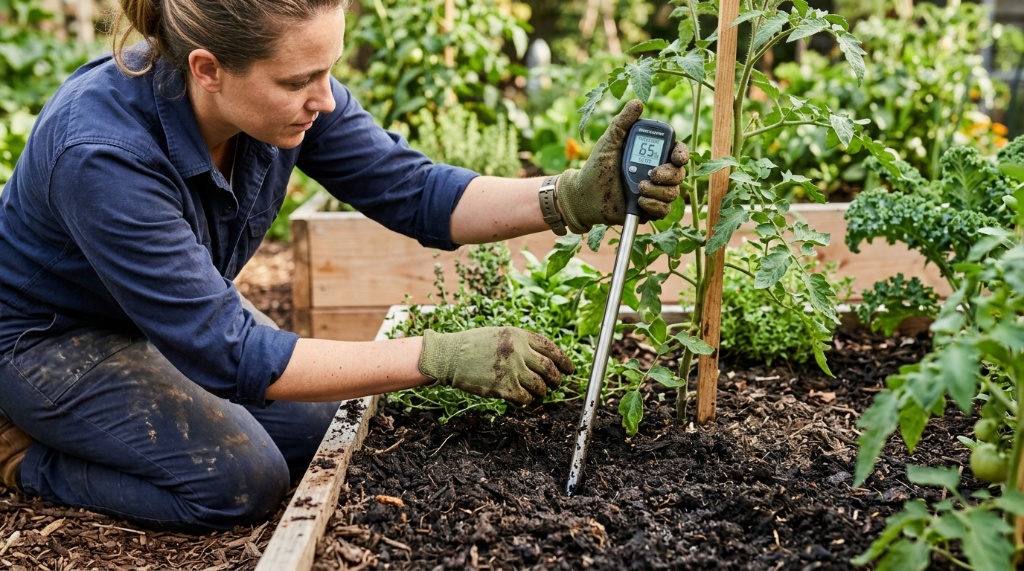
If you’re unsure, push a screwdriver into the soil. If it slides in easily, the lawn doesn’t need water. If it resists, the soil is dry and the lawn likely needs a deep soak.
The Rain Sensor Mistake
Many Florida homes have irrigation systems without a functioning rain sensor, or with one that was never wired in. A rain sensor shuts off the system after meaningful rainfall, which prevents the most common overwatering scenario in the state. If your system lacks one, adding it is one of the cheapest, highest-impact fixes available.
Mowing Practices That Reduce Water Demand
Mowing and watering are linked more tightly than most homeowners realize. Cutting grass too short removes the leaf area that shades the soil and produces energy for root growth, which increases water stress. Leaving grass slightly taller during summer heat is one of the simplest ways to cut irrigation needs.
- St. Augustine: mow at 3.5–4 inches during summer.
- Zoysia: 2–2.5 inches depending on variety.
- Bahia: 3–4 inches; it tolerates a taller, more natural cut.
- Bermudagrass: 1–1.5 inches, but only with adequate irrigation and full sun.
The rule of thumb is never to remove more than one-third of the blade height in a single mowing. Scalping stresses grass severely and forces it to draw more water to recover. A mower that cuts frequently at a consistent height — the way a robotic mower does — avoids the scalping cycle entirely.
Why Frequent Light Cuts Help
Grass clippings from a light cut decompose quickly and return moisture and nutrients to the soil. Heavy cuts produce clumps that smother grass and trap moisture, contributing to fungal problems. Robotic mowers cut a tiny amount at a time and leave fine clippings distributed evenly, which supports soil health without the thatch buildup that heavy mowing creates. That said, robotic mowers are not a substitute for proper irrigation — they reduce stress, they don’t eliminate the need to water correctly.
How to Build a Watering Schedule That Actually Works
Rather than setting a timer and forgetting it, build a schedule that responds to weather and soil. The steps below work for most Florida lawns.
- Measure your system’s output. Place several straight-sided cans around a zone, run the system for 15 minutes, and measure the average depth. That tells you how long to run to reach ½–¾ inch.
- Check your county’s watering restrictions. Most Florida counties allow irrigation only on specific days and before 10 a.m. or after 4 p.m.
- Set the timer for deep, infrequent cycles — not daily short runs.
- Install or repair a rain sensor so the system shuts off automatically after rainfall.
- Walk the lawn weekly and check soil moisture with a screwdriver or moisture meter before overriding the schedule.
- During the rainy season, switch the system to manual or reduce run times by 30–50 percent.
The most common failure is step five. Timers don’t know it rained two hours ago. A weekly manual check catches problems a schedule never will.
Common Overwatering Mistakes in Florida
Certain mistakes repeat across nearly every Florida lawn that struggles with water. Recognizing them helps you avoid the same pattern.
- Watering every day because the surface looks dry. The top inch can be dry while the root zone is still saturated.
- Running the system during or right after rain because the timer wasn’t updated.
- Watering in the evening, which leaves blades wet overnight and encourages fungal disease.
- Applying fertilizer and then watering heavily to “push growth” — this leaches nutrients and promotes shallow roots.
- Ignoring runoff. On sloped or compacted areas, water runs off before it soaks in; split the cycle into two shorter runs to improve absorption.
Frequently Asked Questions
How often should I water my Florida lawn in summer?
In peak summer, most Florida lawns need water every 2 to 3 days, minus days with meaningful rainfall. The goal is about ½ to ¾ inch per session. If afternoon storms are regular, you may be able to skip irrigation entirely for stretches. Always check soil moisture before watering rather than relying on a fixed number.
Is it better to water in the morning or evening in Florida?
Early morning is best. Watering between roughly 4 and 10 a.m. lets grass blades dry during the day, reducing the risk of fungal disease. Evening watering leaves blades wet overnight in Florida’s humid conditions, which is the ideal environment for large patch and gray leaf spot.
Can a robotic mower help reduce watering needs?
Indirectly, yes. A robotic mower cuts frequently and lightly, which avoids scalping and keeps grass at a consistent, stress-reducing height. Healthier grass with deeper roots uses water more efficiently. However, a mower does not replace correct irrigation — it supports it.
How do I know if I’m overwatering or underwatering?
Check the soil, not just the grass. Overwatered soil is spongy and wet an inch down, often with yellowing patches or fungal growth. Underwatered soil is dry and hard, with crisp leaf tips and blades that fold. A screwdriver pushed into the soil is a quick, reliable test.
Do Florida watering restrictions apply to my lawn?
Yes. Most Florida counties and water management districts set mandatory irrigation days and hours, typically limiting watering to one or two days per week depending on the season and region. Rules vary by location and can change during drought conditions, so check your local water management district’s current guidelines before adjusting your timer.
Should I water more after fertilizing?
Not necessarily more — water appropriately. Light irrigation after fertilizing helps move nutrients into the soil, but heavy watering leaches nitrogen past the root zone, wasting product and polluting groundwater. Follow the fertilizer label and rely on your normal deep-watering schedule.
Conclusion
Healthy Florida lawns are not the product of more water — they’re the product of smarter water. Deep, infrequent irrigation, morning timing, working rain sensors, and a taller mowing height solve most overwatering problems before they start. Pair those habits with a mower that cuts lightly and consistently, and you reduce stress on the grass while using less water. Start by measuring your sprinkler output and checking your county’s restrictions this week, then adjust from there. Small, steady changes beat dramatic overhauls every time.