

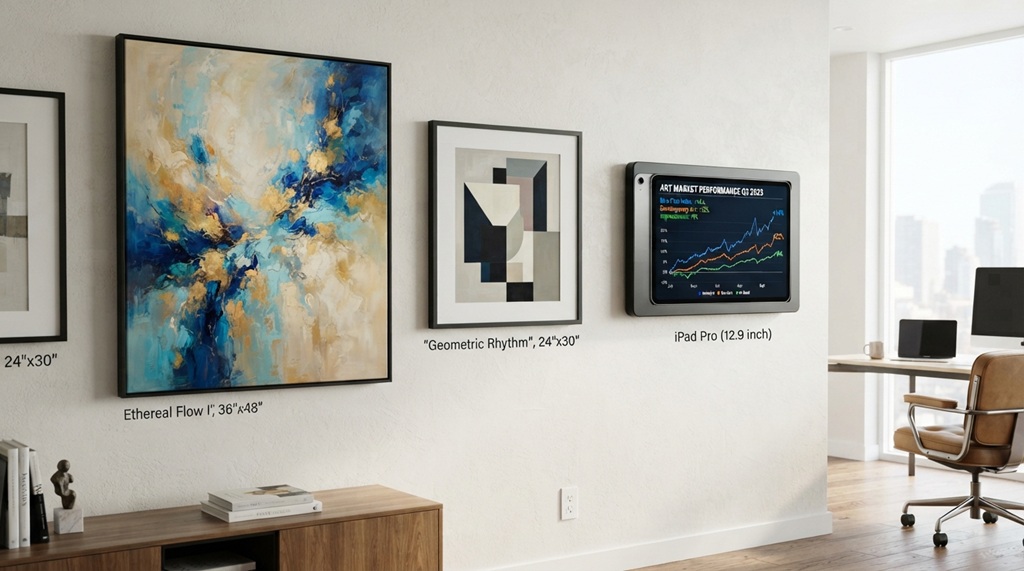
The safest art investing strategies combine diversification, provenance research, and patient holding periods. Investors who spread capital across artists, eras, and price tiers reduce their exposure to any single market downturn. Combining this with fractional ownership platforms and insured storage further protects capital from both market and physical risk.
Art has earned a reputation as an alternative asset that behaves differently from stocks and bonds. But that reputation only holds if you approach it with the right strategy. Buy blindly, and art becomes one of the riskiest assets you can own.
This guide breaks down the specific strategies serious collectors and investors use to manage that risk, without needing millions in capital or decades of gallery experience.
Diversify Across Artists, Movements, and Price Tiers
Diversification lowers risk in art the same way it does in any portfolio: by making sure no single bad outcome sinks your entire position. A collector who owns five works from five different artists is far less exposed than someone who put everything into one name.
Spread Across Multiple Artists
Buying multiple pieces from a single artist feels intuitive, especially if you believe in their trajectory. But artist-specific risk is real. A scandal, a shift in critical opinion, or simply falling out of fashion can tank the value of an entire body of work overnight.
Spreading purchases across five, ten, or more artists reduces this concentration risk. Even within a modest budget, collectors can build exposure to different styles, generations, and markets.
Mix Established and Emerging Names
Blue-chip artists (think Picasso, Warhol, or Basquiat) offer stability but come with high entry prices and slower percentage growth. Emerging artists offer higher upside but carry more uncertainty.
A balanced approach often mirrors a stock portfolio: a core of established names for stability, paired with a smaller allocation to emerging talent for growth potential.
Research Provenance Before Every Purchase
Provenance is the ownership history of an artwork, and skipping this step is one of the biggest risks in art investing. A piece with unclear or disputed ownership can lose most of its value, or become entirely unsellable, regardless of how good the work looks.
Before buying, investors should confirm the piece’s full ownership chain, check it against stolen art databases, and verify any prior sale records through auction houses or galleries. According to industry experts, incomplete provenance is one of the most common reasons a seemingly good deal turns into a costly mistake.
Working with a reputable dealer or auction house doesn’t eliminate this risk, but it does add a layer of accountability. Always ask for documentation in writing, not just verbal assurance.
Use Fractional Ownership to Reduce Capital Risk
Fractional ownership platforms let investors buy a share of a high-value artwork instead of the whole piece, which directly lowers the capital risk of any single purchase. Instead of committing $500,000 to one painting, an investor might put $5,000 into a fraction of that same painting alongside hundreds of other buyers.
This approach spreads risk across many investors and many artworks, similar to how a REIT spreads real estate risk across many properties. It also opens the market to people who could never afford single-artist blue-chip pieces otherwise.
The tradeoff is liquidity. Fractional shares can be harder to sell quickly compared to owning a physical piece outright, since you depend on the platform’s resale market. Investors should treat this as a longer-term holding rather than a quick flip.
Hold for the Long Term Instead of Flipping
Short holding periods increase risk because art markets move slower and less predictably than public equities. A painting bought this year might not find a buyer at a good price for another five or ten years.
Long-term holding gives the market time to recognize an artist’s value, and it smooths out short-term price volatility. Data from major auction houses consistently shows that art appreciation tends to reward patience over speculation.
This doesn’t mean every piece needs decades on the wall. But investors should enter with a horizon of at least five to seven years, treating art more like a long-term allocation than a trading vehicle.
Insuring and Storing Art to Neutralize Physical Risk
Unlike intangible stocks or digital assets, fine art is a tangible physical asset continuously exposed to environmental degradation, accidental damage, and theft. Neutralizing these real-world vulnerabilities requires specialized museum-grade climate controls, secure archival storage, and comprehensive insurance policies tailored to market value fluctuations. Safeguard your physical collection to preserve its capital value—and once your assets are secure, explore art investing builds lasting wealth to effectively integrate risk-adjusted fine art into your long-term growth portfolio.
Get Specialized Art Insurance
Standard homeowner’s insurance rarely covers fine art at full value. Specialized art insurance accounts for appraised value, market fluctuations, and specific risks like transit damage or humidity exposure.
Use Climate-Controlled, Professional Storage
Temperature, humidity, and light exposure all degrade artwork over time. Investors holding higher-value pieces often use professional storage facilities designed specifically for art, which maintain stable conditions and often include built-in security and insurance options.
Work With Independent Appraisers, Not Just the Seller
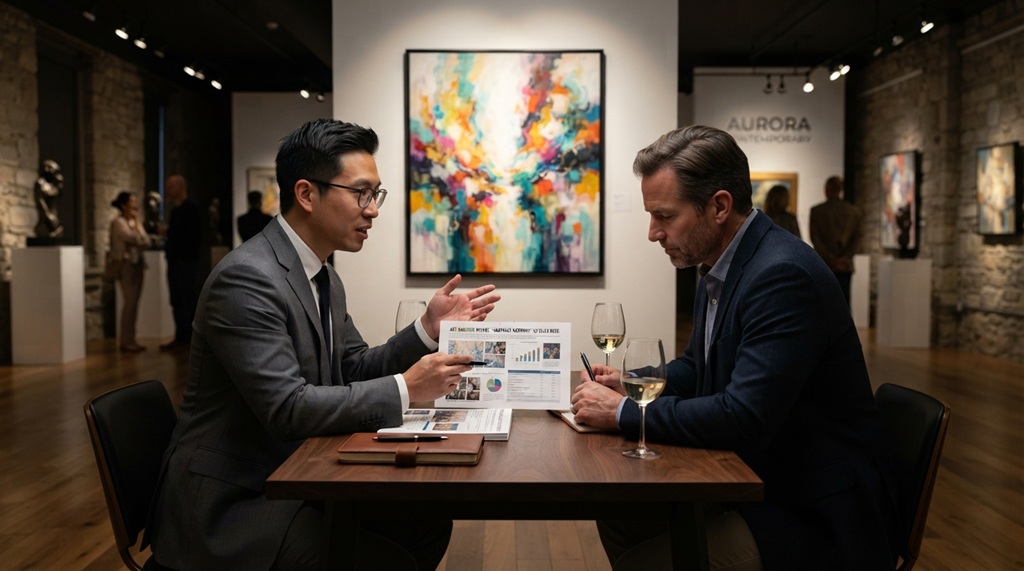
Relying only on a seller’s valuation creates an obvious conflict of interest. Independent, certified appraisers give investors an unbiased read on fair market value before they commit capital.
This step matters most at higher price points, where even small percentage errors in valuation translate into large dollar amounts. A second opinion from an appraiser with no stake in the sale acts as a simple but effective risk check.
Many investors skip this step to save on fees, but the cost of an independent appraisal is small compared to the risk of overpaying for a piece that doesn’t hold its value.
One Overlooked Strategy: Track Museum and Institutional Interest
A genuinely useful but underused signal is watching which living artists are being acquired by major museums or included in institutional exhibitions. Museum acquisitions act as a form of long-term validation that private market hype often doesn’t provide.
Artists who move from gallery shows into museum collections tend to see more stable, durable value growth, since institutional interest reflects critical and historical significance rather than short-term trend cycles. Tracking these acquisitions, which are often publicly announced, gives investors an early, relatively low-risk signal that’s easy to miss if you’re only watching auction results.
Frequently Asked Questions
Is art a safe investment compared to stocks?
Art is generally riskier than stocks due to illiquidity, valuation subjectivity, and physical risk. However, it can lower overall portfolio risk when used as a diversification tool, since art prices don’t always move in sync with equity markets.
How much should I invest in art to lower risk?
Most financial advisors suggest limiting alternative assets like art to a small percentage of a total portfolio, often cited as 5-10%. This keeps art’s illiquidity and volatility from significantly impacting overall financial stability.
Does buying multiple smaller pieces lower risk more than one expensive piece?
Yes, generally. Spreading capital across several smaller works reduces the impact of any single artist or piece underperforming, similar to diversification in any asset class.
Are art investment funds safer than buying art directly?
Art investment funds can lower risk through professional management and built-in diversification, but they also add management fees and less personal control. They suit investors who want art exposure without handling authentication, storage, or resale themselves.
How long should I hold an art investment to minimize risk?
Most experts recommend a minimum holding period of five to seven years. Longer horizons give the market time to recognize value and reduce the risk of selling during a temporary downturn.
Final Thoughts
Lowering risk in art investing comes down to a few consistent habits: diversifying across artists and price points, verifying provenance, considering fractional ownership, holding for the long term, and protecting pieces with proper insurance and storage. None of these strategies eliminate risk entirely, since art remains an illiquid and subjective asset class.
But investors who apply them consistently put themselves in a far stronger position than those who buy on impulse or hype. Treat art investing with the same discipline you’d apply to any other part of your portfolio, and the risk becomes manageable rather than unpredictable.