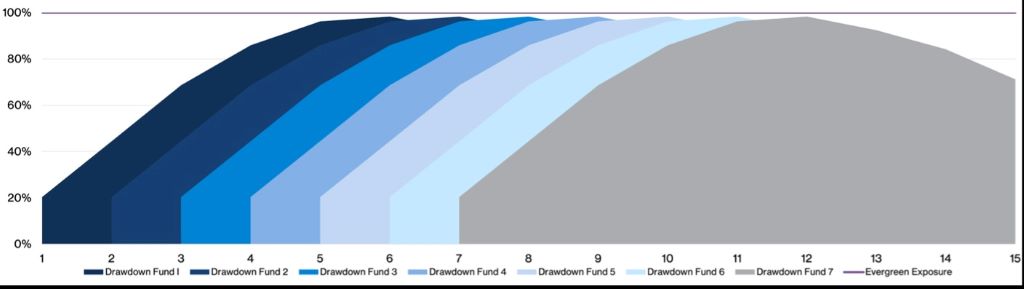
Private equity and venture capital firms are revolutionizing their fundraising approaches through innovative structures. Traditional fundraising methods often create lengthy gaps between capital raises. However, modern investment strategies require more flexible solutions. Mari Gold Commerce financial experts recognize this shift toward continuous fundraising models.
Understanding the Evergreen Fund Model
The investment landscape has evolved significantly over the past decade. Many fund managers now seek alternatives to traditional closed-end structures. Therefore, understanding what is an evergreen fund becomes essential for investors and fund managers alike.
Additionally, evergreen funds offer unique advantages that traditional funds cannot match. They provide ongoing liquidity options and eliminate the pressure of fixed fundraising deadlines. Furthermore, these structures allow for more strategic timing in both investments and capital deployment.
Traditional Fundraising versus Evergreen Models
Traditional private equity funds follow a structured timeline from inception to liquidation. These funds typically operate on seven to ten-year cycles. Moreover, they require substantial upfront commitments from limited partners during specific fundraising periods.
However, evergreen funds operate differently. They remain open for new investments throughout their existence. This approach allows for continuous capital infusion and strategic flexibility. Additionally, investors can enter or exit based on predetermined conditions rather than fixed schedules.
Key Differences in Structure
Traditional funds close after reaching their target size and begin deploying capital immediately. Subsequently, they focus entirely on portfolio management and value creation. Finally, they liquidate holdings and distribute proceeds to investors.
Evergreen funds maintain ongoing operations without predetermined end dates. They continuously accept new capital while managing existing investments. Therefore, they can respond more quickly to market opportunities and investor demands.
The Evergreen Fund Fundraising Cycle
Understanding the continuous fundraising cycle requires examining its distinct phases. Unlike traditional models, evergreen funds maintain perpetual fundraising activities. However, they still follow structured processes for capital deployment and management.
Initial Launch Phase
The launch phase establishes the fund’s investment strategy and target markets. Fund managers develop detailed offering documents and regulatory compliance frameworks. Additionally, they identify initial investor groups and begin marketing efforts.
During this period, managers focus on building credibility and demonstrating expertise. They often leverage existing relationships and track records. Furthermore, they establish operational infrastructure for ongoing fund management.
Continuous Capital Raising
After launch, evergreen funds maintain ongoing fundraising activities. They regularly assess capital needs based on investment opportunities. Moreover, they adjust fundraising intensity according to market conditions and investor demand.
This continuous approach allows for strategic timing of capital raises. Fund managers can accelerate fundraising during favorable market conditions. Conversely, they can reduce efforts during challenging periods without compromising fund operations.
Portfolio Management Integration
Evergreen funds integrate fundraising with active portfolio management. They use existing portfolio performance to attract new investors. Additionally, they can reinvest distributions from successful exits into new opportunities.
This integration creates a self-reinforcing cycle of growth and performance. Strong portfolio companies generate capital for reinvestment. Subsequently, new investments enhance overall fund performance and attract additional capital.
Benefits of Evergreen Fundraising Structures
Evergreen funds offer significant advantages for both managers and investors. These benefits explain their growing popularity in modern investment markets. However, understanding these advantages requires careful analysis of their impact on investment strategies.
Enhanced Flexibility
Flexibility represents the primary advantage of evergreen structures. Fund managers can adjust strategies based on changing market conditions. Additionally, they can pursue opportunities without waiting for new fund launches.
This flexibility extends to investment timing and portfolio construction. Managers can hold investments longer when beneficial. Conversely, they can exit quickly when market conditions favor liquidity.
Improved Investor Relations
Evergreen funds strengthen relationships between managers and investors. Continuous engagement replaces periodic fundraising cycles. Moreover, investors gain ongoing access to investment opportunities and performance updates.
According to Forbes, institutional investors increasingly prefer evergreen structures for their operational efficiency and strategic flexibility in portfolio allocation.
Capital Efficiency
These structures optimize capital deployment and utilization. Fund managers avoid holding excessive uninvested capital for extended periods. Additionally, they can match capital raising with specific investment opportunities.
Capital efficiency also benefits investors through improved return profiles. Reduced cash drag enhances overall fund performance. Furthermore, continuous deployment opportunities maximize capital utilization.

Challenges and Implementation Considerations
Despite their advantages, evergreen funds face unique challenges. Successful implementation requires careful planning and execution. Moreover, regulatory compliance becomes more complex with continuous operations.
Regulatory Complexity
Evergreen funds must navigate complex regulatory environments. Securities regulations vary significantly across jurisdictions. Additionally, ongoing compliance requirements exceed those of traditional funds.
Fund managers must establish robust compliance frameworks from inception. They need ongoing legal support for regulatory changes. Furthermore, they must maintain detailed records for regulatory reporting and investor communications.
Valuation and Liquidity Management
Accurate valuation becomes critical for evergreen fund operations. Managers must establish fair pricing for investor entries and exits. Additionally, they must balance liquidity provisions with investment strategies.
Valuation challenges increase with portfolio complexity and market volatility. Managers often engage third-party valuation specialists. Moreover, they implement detailed valuation policies and procedures.
Investor Education and Expectations
Many investors lack familiarity with evergreen fund structures. Therefore, comprehensive education becomes essential for successful fundraising. Additionally, managers must clearly communicate differences from traditional funds.
Setting appropriate expectations prevents future conflicts and misunderstandings. Managers should explain liquidity terms, fee structures, and performance measurement methodologies. Furthermore, they must address common misconceptions about evergreen fund operations.
Strategic Implementation Framework
Successful evergreen fund implementation requires systematic planning and execution. Fund managers must address multiple operational and strategic considerations. However, proper preparation enables smooth launches and ongoing operations.
Operational Infrastructure
Establishing robust operational infrastructure supports ongoing fund activities. This includes systems for investor relations, portfolio management, and regulatory compliance. Additionally, managers need scalable processes for continuous capital raising.
Technology solutions enhance operational efficiency and investor communication. Automated reporting systems reduce administrative burdens. Moreover, digital platforms facilitate investor onboarding and ongoing engagement.
Marketing and Investor Development
Continuous fundraising requires ongoing marketing efforts and investor development. Fund managers must maintain consistent messaging and value propositions. Additionally, they need diverse investor acquisition channels and retention strategies.
Successful marketing emphasizes unique advantages of evergreen structures. Managers should highlight flexibility, efficiency, and performance benefits. Furthermore, they must address investor concerns about liquidity and transparency.
Future Trends in Evergreen Fundraising
The evergreen fund market continues evolving with new innovations and applications. Technology advances enable more sophisticated fund structures and operations. Moreover, regulatory changes may further facilitate evergreen fund adoption.
Technology Integration
Advanced technology platforms enhance evergreen fund capabilities. Artificial intelligence improves investment analysis and portfolio management. Additionally, blockchain technology may revolutionize fund administration and investor communications.
Digital platforms also expand investor access and engagement opportunities. Online portals provide real-time portfolio updates and performance information. Furthermore, mobile applications enable convenient investor interactions and transactions.
Market Expansion
Evergreen structures are expanding beyond traditional private equity and venture capital. Real estate funds increasingly adopt these models for enhanced flexibility. Additionally, infrastructure and credit funds explore evergreen applications.
This expansion reflects growing recognition of evergreen benefits across asset classes. Managers seek alternatives to rigid traditional structures. Consequently, innovative fund designs continue emerging in various investment sectors.
Conclusion
Evergreen fund fundraising cycles represent a significant evolution in investment management. These structures offer enhanced flexibility, improved capital efficiency, and stronger investor relationships compared to traditional models. However, successful implementation requires careful attention to regulatory compliance, valuation practices, and investor education. Additionally, robust operational infrastructure and ongoing marketing efforts support continuous fundraising success. As the investment landscape continues evolving, evergreen funds will likely play an increasingly important role in modern portfolio management strategies.
Frequently Asked Questions
Q: How do evergreen funds differ from traditional closed-end funds? A: Evergreen funds remain open for continuous capital raising and don’t have predetermined liquidation dates. Traditional closed-end funds raise capital during specific periods and operate on fixed seven to ten-year cycles before liquidating.
Q: What are the main advantages of investing in evergreen funds? A: Key advantages include enhanced liquidity options, continuous access to investment opportunities, reduced cash drag, and greater flexibility in investment timing. Additionally, investors can enter or exit based on predetermined conditions rather than fixed schedules.
Q: How do evergreen funds handle investor liquidity needs? A: Evergreen funds typically offer periodic liquidity windows, often quarterly or semi-annually, subject to certain conditions and limitations. The fund establishes specific redemption policies and may impose restrictions during volatile market conditions.
Q: What challenges do fund managers face with evergreen structures? A: Primary challenges include complex regulatory compliance, ongoing valuation requirements, continuous marketing efforts, and managing investor expectations. Additionally, balancing liquidity provisions with long-term investment strategies requires careful planning.
Q: Are evergreen funds suitable for all types of investors? A: Evergreen funds work best for investors seeking flexible investment timing and ongoing access to alternative investments. However, they may not suit investors requiring guaranteed liquidity or those preferring traditional fund structures with clear beginning and end dates.
Read More:
The Strange Secrets of Millionaires: Weird Wealth-Building Tactics
Boost Your Startup Growth with These Powerful Business Tools