


Small and mid-sized brands often feel outgunned when standing next to retail giants. However, the rise of the direct-to-consumer model has changed the rules of the game. Today, a lean brand with the right strategy can build loyal customers, higher margins, and real market presence without ever needing shelf space in a big-box store.
This article walks you through how to compete smarter, not bigger, using a direct-to-consumer brand strategy.
What Is a Direct-to-Consumer Brand Strategy?
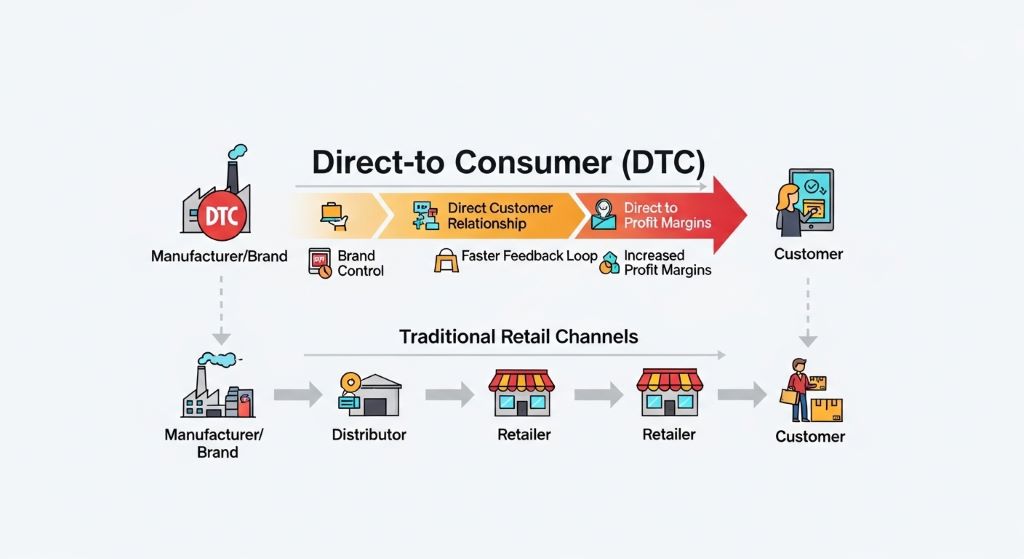
A direct-to-consumer (D2C) brand strategy means selling your products directly to buyers. You skip the middlemen, such as wholesalers, distributors, and traditional retailers. Instead, you own the full customer journey from first click to final purchase.
This approach gives you something retail giants rarely have: a direct relationship with every single customer. You know who they are, what they buy, and why they come back. That data is gold.
Additionally, D2C brands control their own pricing, branding, and customer experience. Retail giants, on the other hand, must share shelf space with dozens of competitors and follow the retailer’s rules. You make your own.
Why Small Brands Can Actually Win Against Big Retailers
It may seem impossible to compete with companies that have billion-dollar budgets. However, size comes with its own problems. Large retailers are slow to change, hard to personalize, and often disconnected from their buyers.
Here is where smaller D2C brands hold a natural edge:
- Speed: You can test a new product, adjust messaging, or pivot your strategy in days, not months.
- Authenticity: Customers today trust people and stories more than corporations. Your brand story is an asset.
- Niche focus: Retail giants try to serve everyone. You can deeply serve one specific audience and do it better than anyone else.
- Data ownership: Every order, click, and email open belongs to you. You learn faster and act on it quicker.
Therefore, the goal is not to out-spend the giants. The goal is to out-know and out-care for your customers.
Build a Brand Identity That Retail Shelves Cannot Offer
One of the biggest advantages of going direct-to-consumer is the ability to build a real brand identity. On a crowded retail shelf, your product has about two seconds to make an impression. Online, you have a full story to tell.
Start with your why. Why does your brand exist? What problem are you solving, and who are you solving it for? Customers connect with purpose. A brand that stands for something specific will always attract more loyal buyers than one that tries to please everyone.
Next, build your visual and verbal identity. Your colors, typography, tone of voice, and values should feel consistent everywhere. This consistency builds trust. Trust builds repeat purchases.
Additionally, your packaging, unboxing experience, and post-purchase communication all become branding opportunities when you go direct. Retail giants simply cannot offer that level of personal touch at scale.
Own Your Customer Data and Use It Well
Retail giants like Amazon or Walmart collect enormous amounts of data. However, when you sell through them, that data belongs to the platform, not you. This is one of the most critical reasons to build a direct-to-consumer channel.
When you own your storefront, you own the relationship. You can collect first-party data, such as purchase history, browsing behavior, and email engagement. You can use that data to:
- Personalize product recommendations
- Send timely, relevant emails that feel human
- Create loyalty programs based on real behavior
- Predict what customers will need before they ask
This kind of personalization is something a mass retailer cannot do. They serve millions of people with the same experience. You can serve your customers like they are the only ones that matter.
Use Content to Build Authority in Your Niche
Large retailers spend on advertising. Smart D2C brands spend on content. Content marketing is one of the most cost-effective tools available to smaller brands because it compounds over time.
Write blog posts that answer real questions your customers are asking. Create videos that show your product in action. Build a community around the problem your product solves. When people search for answers online, you want your brand to be the one showing up.
For example, a skincare brand that educates its audience about ingredients, routines, and skin types becomes a trusted authority. That authority drives traffic, builds email lists, and converts browsers into buyers, all without paying a retail platform for the privilege.
Moreover, search engine optimization (SEO) plays a major role here. Ranking for the right keywords means consistent, free traffic. Over time, this lowers your cost per acquisition and makes your business far more sustainable.
Build a Community, Not Just a Customer List
One of the clearest differences between a retail buyer and a D2C customer is the depth of the relationship. A retail customer picks your product off a shelf, maybe out of habit or price. A D2C customer chose you specifically.
Therefore, nurture that choice. Build community around your brand by engaging on social media, creating spaces where customers can share experiences, and rewarding your most loyal buyers. A loyal community will market your brand for you through word of mouth.
Brands like Glossier and Gymshark grew massive followings before they ever became household names. They listened, responded, and involved their customers in the brand journey. You can do the same at a smaller scale with the same principles.
Price Smarter, Not Cheaper
Retail giants win on price. Competing on price alone against a company that can absorb losses for years is a race you will not win. Instead, compete on value.
D2C brands can offer better value through quality, service, experience, and story. Customers are often willing to pay more when they feel a genuine connection to the brand and trust the product.
Additionally, by cutting out the middlemen, your margins are actually higher at the same retail price point. This means you can invest more in product quality, customer service, and marketing without needing to slash prices.
Use your pricing to reflect the premium experience you provide, not to undercut the giants.
Leverage Technology to Scale Efficiently
You do not need a massive team to compete today. Modern D2C brands use technology to punch well above their weight. Platforms like Shopify, Klaviyo, and Meta Ads give small teams access to tools that were once reserved for enterprise companies.
Automate your email flows, use data to target your ads more precisely, and use customer service tools to respond faster. Technology levels the playing field considerably. However, remember that technology supports your brand strategy. It does not replace the need for a clear identity and a genuine customer relationship.
Conclusion
Competing with retail giants is entirely possible when you stop trying to fight them on their terms. A direct-to-consumer brand strategy gives you the tools to build deeper customer relationships, own your data, tell a compelling story, and serve a specific audience better than any mass retailer ever could.
The key advantages are clear. You move faster, you personalize better, you own the data, and you build a brand that customers actually care about. Start with a strong brand identity, invest in content and community, use data wisely, and price on value. Done consistently, this approach does not just help you survive against the giants. It helps you thrive.
Frequently Asked Questions
What is the main difference between D2C and traditional retail?
In traditional retail, you sell through a third party like a store or distributor. In D2C, you sell directly to the end customer, giving you full control over pricing, branding, and customer data.
Is a direct-to-consumer strategy suitable for small businesses?
Yes, absolutely. In fact, smaller businesses often benefit more because they can move quickly, personalize deeply, and build authentic relationships that large retailers struggle to replicate.
How can a D2C brand compete on pricing without losing margin?
By removing middlemen, D2C brands often enjoy higher margins at the same price point. Instead of competing on lowest price, focus on offering superior quality, service, and experience.
What digital channels work best for D2C brands?
A combination of a branded website, email marketing, social media, and SEO-driven content tends to work well. Paid advertising on platforms like Meta and Google can amplify reach once the organic foundation is in place.
How long does it take to see results from a D2C strategy?
It varies, but most brands begin seeing meaningful traction within 6 to 12 months of consistent effort. Content and community building take time but deliver compounding returns over the long term.
Related Topics:
Easy Micro-Business Ideas for Stay-at-Home Entrepreneurs
Start Baking Business from Home (Full Plan with Cost)