


Clean offices influence productivity, employee health, and brand perception. Dusty carpets, debris in corners, and allergens in the air create a negative work environment. That’s why businesses increasingly invest in commercial vacuum cleaners rather than relying on residential machines.
A commercial vacuum cleaner is a heavy-duty cleaning machine designed for high-traffic environments such as offices, hotels, schools, and hospitals. Unlike household models, these machines operate for longer hours, have stronger suction power, and are built to handle large areas quickly.
According to a 2023 report from the International Sanitary Supply Association (ISSA), businesses that use professional cleaning equipment experience up to 30% higher cleaning efficiency compared with manual methods or domestic machines.
Office managers often face a challenge. There are hundreds of office cleaning machines available. Some promise powerful suction, others highlight portability or filtration. Choosing the wrong one leads to frequent breakdowns, wasted budgets, and inefficient cleaning.
This guide solves that problem. You’ll learn how to evaluate professional vacuum cleaners, understand essential features, compare types, and select the right heavy-duty vacuum for office environments. By the end, you’ll know exactly what to look for before making a purchase.
Why Should Offices Use Commercial Vacuum Cleaners Instead of Household Models?
Short Answer: Commercial vacuum cleaners are designed for durability, larger cleaning areas, stronger suction, and longer operating hours—making them ideal for office environments.
Many businesses initially purchase domestic vacuums because they cost less. However, household machines are built for occasional use. Offices require daily cleaning across large areas.
Here are the main differences.
| Feature | Household Vacuum | Commercial Vacuum Cleaner |
|---|---|---|
| Usage | Light, occasional cleaning | Daily heavy cleaning |
| Motor Strength | Low to moderate | High-powered motors |
| Durability | Limited lifespan | Designed for years of use |
| Capacity | Small dust containers | Large-capacity bins or bags |
| Cleaning Area | Small homes | Large offices and commercial spaces |
For example, a mid-size office with 50 employees may generate over 1 kg of dust and debris weekly, according to facility management reports. A domestic vacuum struggles to handle that workload.
This is why facility managers rely on heavy-duty vacuum cleaners specifically engineered for professional cleaning environments.
What Types of Commercial Vacuum Cleaners Are Best for Offices?
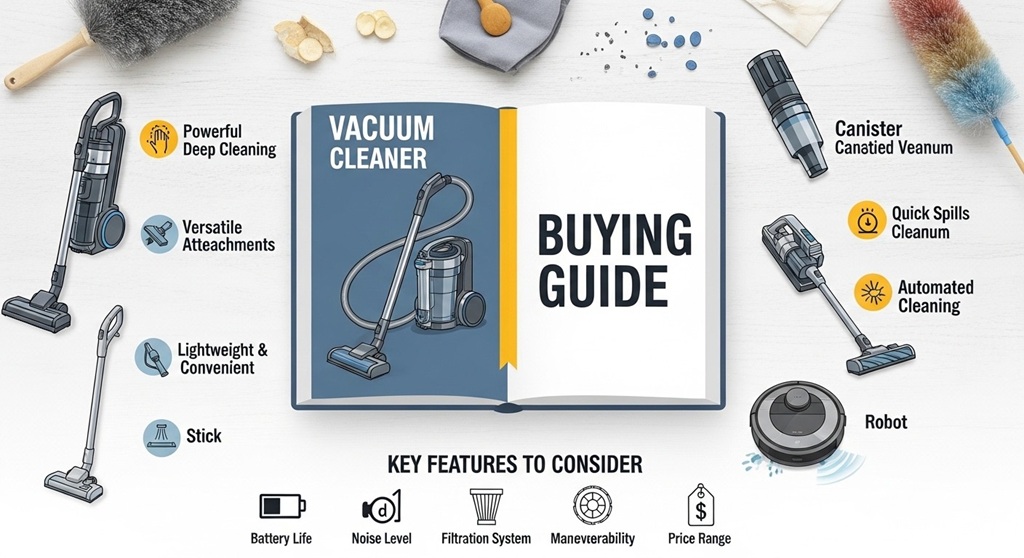
Short Answer: The best office vacuum types include upright, backpack, canister, robotic, and wet/dry commercial vacuums.
Choosing the correct machine depends on office layout, flooring type, and cleaning frequency.
1. Upright Commercial Vacuums
Upright vacuums are among the most popular professional vacuum cleaners used in offices with carpet flooring.
- Strong suction power
- Wide cleaning path
- Easy to maneuver
- Good for large carpeted areas
Many cleaning companies prefer uprights because they cover large floor areas quickly.
2. Backpack Vacuum Cleaners
Backpack vacuums are designed for mobility. The cleaner wears the machine like a backpack.
- Excellent for staircases
- Great for tight office spaces
- Reduces cleaning time
- Improves productivity
A study by the Cleaning Industry Research Institute showed that backpack vacuums can increase cleaning speed by up to 230% compared with upright models.
3. Canister Vacuum Cleaners
Canister vacuums work well for offices with mixed flooring.
- Flexible hoses reach under desks
- Suitable for hard floors
- Good maneuverability
- Low noise levels
4. Wet/Dry Commercial Vacuums
These heavy-duty vacuums handle both dry debris and liquid spills.
- Ideal for cafeterias and break rooms
- Useful during deep cleaning
- Handles heavy debris
5. Robotic Commercial Vacuums
Automation is entering office cleaning.
Robotic office cleaning machines are useful for large office floors that require daily maintenance cleaning.
- Automated scheduling
- Consistent cleaning
- Reduces labor costs
What Features Should You Look for in a Professional Vacuum Cleaner?
Short Answer: Focus on suction power, filtration system, capacity, durability, and noise level.
Buying the wrong machine often comes down to ignoring essential features.
Suction Power
Measured in Air Watts or CFM, suction power determines how effectively the vacuum removes dust and debris.
For office environments, experts recommend machines with 150–300 Air Watts or higher.
HEPA Filtration
Indoor air quality matters. Offices contain allergens such as dust mites and pollen.
HEPA filters capture 99.97% of particles as small as 0.3 microns, according to the U.S. Environmental Protection Agency.
This improves workplace air quality and supports employee health.
Large Dust Capacity
Frequent emptying slows down cleaning operations.
Commercial vacuums typically offer 5–15 liter dust capacity, allowing cleaners to work longer without interruption.
Noise Level
Offices require quiet equipment.
Look for machines operating below 70 decibels. Quiet operation ensures cleaning does not disrupt meetings or work hours.
Cord Length or Battery Life
Long cords or strong batteries reduce interruptions.
Most commercial machines offer 10–15 meter cords for extended cleaning coverage.
How Do You Choose the Right Vacuum Based on Office Size?
Short Answer: Match vacuum capacity and cleaning path width with the office floor area.
| Office Size | Recommended Vacuum Type | Key Feature |
|---|---|---|
| Small Office (Under 3,000 sq ft) | Canister vacuum | Compact and flexible |
| Medium Office (3,000–10,000 sq ft) | Upright commercial vacuum | Wide cleaning path |
| Large Office (10,000+ sq ft) | Backpack or robotic vacuum | High productivity |
Facility managers often calculate cleaning efficiency based on square footage per hour. Backpack vacuums typically clean 20,000 sq ft per hour, making them ideal for large workspaces.
What Is the Cost of Commercial Vacuum Cleaners?
Short Answer: Commercial vacuum cleaners typically cost between $200 and $1,500, depending on features and durability.
Here is a general price breakdown.
| Type | Average Price |
|---|---|
| Upright commercial vacuum | $250 – $700 |
| Canister vacuum | $200 – $600 |
| Backpack vacuum | $300 – $800 |
| Wet/dry vacuum | $400 – $1,200 |
| Robotic commercial vacuum | $800 – $1,500+ |
While the upfront investment may seem high, commercial vacuums reduce long-term costs by improving efficiency and lasting longer.
What Real Case Study Shows the Impact of Commercial Vacuum Cleaners?
Short Answer: Professional cleaning equipment improves productivity and reduces cleaning time.
A facility management company in Singapore upgraded from household vacuums to backpack commercial vacuums across three office buildings.
Results after 6 months:
- Cleaning time reduced by 40%
- Employee complaints about dust reduced by 60%
- Maintenance costs reduced by 35%
This example demonstrates how investing in proper office cleaning machines leads to measurable operational benefits.
What Maintenance Tips Extend the Life of Commercial Vacuums?
Short Answer: Regular maintenance ensures consistent suction and longer equipment life.
- Empty dust containers regularly
- Replace filters every 3–6 months
- Inspect hoses for blockages
- Clean brush rolls weekly
- Schedule periodic professional servicing
Proper maintenance can extend the life of professional vacuum cleaners to 5–8 years, depending on usage.
Conclusion: How Can the Right Commercial Vacuum Improve Office Cleaning?
Office cleanliness affects employee health, workplace productivity, and professional image. Dust, allergens, and debris accumulate quickly in busy work environments. Using the wrong cleaning equipment creates inefficiency and unnecessary costs.
A well-chosen commercial vacuum cleaner solves these problems. It delivers stronger suction, better filtration, and faster cleaning performance than household machines. Whether you choose an upright model, backpack vacuum, or robotic cleaner, the right equipment transforms how offices maintain hygiene.
Facility managers should evaluate several factors before buying: office size, flooring type, suction power, filtration system, and durability. These criteria help identify the best heavy-duty vacuum for your workplace.
If your office cleaning process feels slow or ineffective, upgrading to professional office cleaning machines may be the solution.
Ready to improve workplace cleanliness? Evaluate your office needs today and invest in a commercial vacuum cleaner designed for professional environments. The right machine saves time, reduces costs, and keeps your office healthier.
Frequently Asked Questions About Commercial Vacuum Cleaners
What is the difference between commercial and residential vacuum cleaners?
Commercial vacuum cleaners are built for high-frequency cleaning and large spaces. They feature stronger motors, durable construction, larger dust capacity, and better filtration compared to residential models.
How often should offices vacuum their floors?
Most offices should vacuum daily in high-traffic areas and two to three times per week in low-traffic zones. Regular vacuuming helps control dust, allergens, and debris accumulation.
Are HEPA filters necessary for office vacuums?
Yes. HEPA filtration captures 99.97% of microscopic particles, improving indoor air quality. Offices with carpets or high foot traffic benefit significantly from HEPA-filtered vacuum cleaners.
Which vacuum is best for carpeted offices?
Upright commercial vacuum cleaners are typically best for carpeted offices. They include motorized brush rolls and strong suction designed to remove embedded dirt from carpets.
Can commercial vacuums be used on hard floors?
Yes. Many commercial vacuums include adjustable brush settings or hard floor attachments that safely clean tile, laminate, and hardwood surfaces.
How long does a commercial vacuum cleaner last?
With proper maintenance, commercial vacuum cleaners typically last between 5 and 8 years. Regular filter replacement and proper cleaning help extend lifespan.
Are robotic vacuums suitable for offices?
Robotic commercial vacuums are useful for large offices requiring consistent daily cleaning. They work best as supplementary machines alongside manual professional vacuums.
Read More Also: How to Analyze Business Performance Metrics with a Business Activity Monitor
Find out: Why Mesh Ergonomic Office Chairs Are Ideal for Long Workdays