

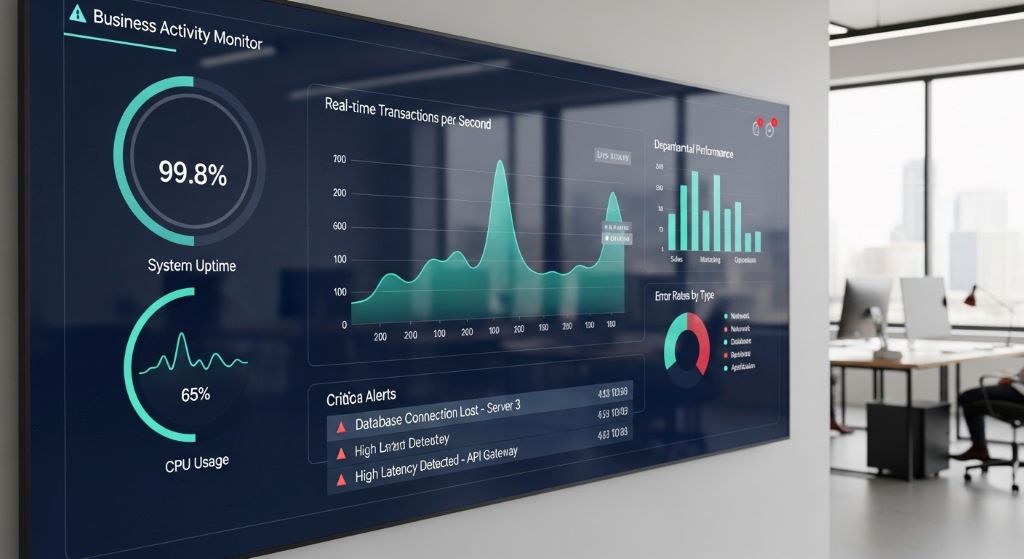
Every business generates data. However, not every business knows how to use that data well. Sales figures, customer activity, revenue trends, and operational costs all tell a story. The challenge is reading that story clearly and acting on it in time.
A business activity monitor helps you do exactly that. It collects, displays, and analyzes performance metrics in real time. Therefore, you can spot problems early, track progress, and make smarter decisions every day.
This article explains what a business activity monitor is, which metrics matter most, and how to use one to improve your business performance step by step.
What Is a Business Activity Monitor?
A business activity monitor, often called a BAM tool, is a software platform that tracks business operations in real time. It pulls data from multiple sources and presents it in one central dashboard. As a result, managers and teams can see what is happening across the business at any given moment.
Originally, BAM tools were used mainly in IT and supply chain management. Today, however, they are common across finance, sales, marketing, customer service, and human resources. The goal is always the same: turn raw data into clear, actionable insight.
Unlike static reports that show you what happened last week or last month, a business activity monitor shows you what is happening right now. This real-time visibility is one of its biggest advantages.
Why Analyzing Business Performance Metrics Matters
Business performance metrics are measurable values that show how well your company is achieving its goals. Without tracking these metrics, you are essentially running your business blind. You may feel like things are going well, but you have no data to confirm or challenge that feeling.
Additionally, metrics help you compare your current performance against past results or industry benchmarks. This comparison tells you whether you are improving, staying the same, or falling behind. It also helps you identify which areas need the most attention.
When you combine regular metric tracking with a business activity monitor, you gain a powerful system for continuous improvement. You no longer have to wait for quarterly reviews to find out how your business is doing.
Key Business Performance Metrics to Track
Not all metrics are equally useful. Therefore, it is important to focus on the ones that truly reflect your business health. Here are some of the most valuable categories to monitor.
Financial Metrics
Financial metrics tell you whether your business is profitable and sustainable. The most important ones include:
- Revenue growth rate: Shows how fast your income is increasing over time.
- Gross profit margin: Reveals how much profit you keep after covering the cost of goods sold.
- Operating expenses: Tracks the cost of running the business day to day.
- Cash flow: Monitors how money moves in and out of the business each period.
Customer Metrics
Customer metrics help you understand how well you are serving your audience. Key examples include:
- Customer acquisition cost (CAC): Measures how much it costs to gain each new customer.
- Customer lifetime value (CLV): Estimates the total revenue one customer brings over time.
- Net promoter score (NPS): Gauges customer satisfaction and loyalty.
- Churn rate: Tracks the percentage of customers who stop doing business with you.
Operational Metrics
Operational metrics reflect the efficiency of your internal processes. These include:
- Order fulfillment time: Measures how quickly orders are processed and delivered.
- Employee productivity: Tracks output per worker across teams or departments.
- Inventory turnover: Shows how often stock is sold and replaced within a period.
How to Set Up Your Business Activity Monitor
Setting up a business activity monitor is not as complicated as it might seem. However, it does require clear planning before you begin. Follow these steps for the best results.
Step 1: Define Your Goals
Start by asking what you want to achieve. Are you trying to reduce costs? Improve customer retention? Grow sales? Your goals will determine which metrics matter most. Without clear goals, you risk tracking data that does not help you make better decisions.
Step 2: Choose the Right Data Sources
Your BAM tool needs to pull data from the right places. These might include your CRM system, accounting software, e-commerce platform, or HR database. Therefore, make sure your monitor can connect to all the tools your business already uses. The more complete your data, the more accurate your analysis will be.
Step 3: Build a Clear Dashboard
A good dashboard shows the most important metrics at a glance. Keep it simple. Avoid cluttering the screen with too many numbers. Instead, group related metrics together and use visual elements like charts and graphs. This makes it easier for your team to understand the data quickly.
Step 4: Set Alerts and Thresholds
One of the most powerful features of a business activity monitor is the ability to set alerts. For example, you can receive a notification when sales drop below a certain level or when customer complaints spike. As a result, you can respond quickly instead of discovering the problem days later.
Step 5: Review and Adjust Regularly
A business activity monitor is not a set-and-forget tool. You should review your metrics regularly, ideally every week or every month. Additionally, revisit your dashboard setup every quarter to make sure it still reflects your current business goals. As your business grows, your metrics will evolve too.

Common Mistakes to Avoid When Monitoring Business Metrics
Many businesses make avoidable errors when they start tracking performance metrics. Being aware of these mistakes can save you a lot of time and confusion.
One common mistake is tracking too many metrics at once. This leads to information overload. Therefore, focus on a small number of key metrics that directly relate to your goals.
Another mistake is failing to act on the data. A business activity monitor provides insights, but insights only have value when they lead to action. Make sure your team has a clear process for responding to what the data shows.
Additionally, some businesses focus too much on vanity metrics. These are numbers that look impressive but do not actually indicate business health. For example, high website traffic means little if visitors are not converting into customers.
Finally, do not ignore the human side of data. Numbers tell you what is happening, but they do not always explain why. Use your data as a starting point for deeper conversations with your team.
How a Business Activity Monitor Improves Decision-Making
Good decisions come from good information. A business activity monitor improves decision-making in several important ways.
First, it reduces reliance on guesswork. When you have real-time data available, you do not have to rely on gut feelings or outdated reports. Instead, you can make choices based on what is actually happening.
Second, it helps you identify trends early. For instance, if your BAM tool shows a steady decline in repeat purchases over three weeks, you can investigate and respond before the problem becomes serious.
Third, it improves team alignment. When everyone in the organization can see the same data, it is easier to agree on priorities and measure progress together. Therefore, teams are less likely to work at cross-purposes.
Finally, a business activity monitor supports accountability. When goals and metrics are visible, individuals and teams are more motivated to meet their targets.
Choosing the Right Business Activity Monitor for Your Needs
There are many BAM tools available today. However, not every tool is right for every business. Consider the following factors when making your choice.
Ease of use matters a great deal. Your team should be able to navigate the dashboard without extensive training. A complex tool that nobody uses provides no value at all.
Integration capability is equally important. The tool should connect smoothly with your existing software systems. Otherwise, you will spend too much time manually importing data.
Scalability is another key consideration. As your business grows, your monitoring needs will change. Therefore, choose a platform that can grow with you and handle larger volumes of data over time.
Cost is always a factor too. Some tools offer free tiers for small businesses, while others charge based on the number of users or data sources. Compare your options carefully and choose one that fits your budget without sacrificing essential features.
Conclusion
Analyzing business performance metrics is one of the most valuable habits any business owner or manager can develop. However, doing it well requires the right tools and the right approach.
A business activity monitor gives you real-time visibility into the metrics that matter most. It helps you catch problems early, track progress toward your goals, and make informed decisions every day. Additionally, it brings your team together around a shared understanding of performance.
To get the most out of your BAM tool, start by defining your goals clearly. Then choose the right data sources, build a clean dashboard, and set up alerts for key thresholds. Review your metrics regularly and be ready to act on what you find.
Avoid common pitfalls like tracking too many metrics or focusing on vanity numbers. Instead, keep your focus on the data that drives real business outcomes. With the right system in place, you can turn your business data into your greatest competitive advantage.
Frequently Asked Questions
1. What is the difference between a business activity monitor and a regular analytics tool?
A regular analytics tool typically shows historical data. A business activity monitor, however, focuses on real-time data. This means you can see what is happening in your business right now, not just what happened in the past. Additionally, BAM tools often include automated alerts, which most standard analytics platforms do not offer.
2. How many metrics should I track at once?
There is no universal number, but most experts recommend focusing on five to ten key metrics at a time. Too many metrics can lead to confusion and slow decision-making. Therefore, start with the metrics most closely tied to your current business goals and expand gradually as needed.
3. Can small businesses benefit from a business activity monitor?
Absolutely. In fact, small businesses often benefit the most because they have fewer resources to waste. A BAM tool helps small teams make faster, more confident decisions without needing a large data analysis department. Many affordable tools are available specifically for small and medium-sized businesses.
4. How often should I review my business performance metrics?
The frequency depends on the type of metric. Financial metrics like cash flow may need daily or weekly attention. Customer satisfaction scores might be reviewed monthly. Operational metrics often benefit from weekly reviews. Additionally, conduct a broader strategic review of all your metrics at least once per quarter.
5. What happens if my data is inaccurate or incomplete?
Inaccurate data leads to poor decisions, which can be worse than having no data at all. Therefore, data quality is critical. Make sure your data sources are reliable and that your systems are set up to capture information correctly. Regularly audit your data pipelines to check for errors or gaps. A business activity monitor is only as good as the data that flows into it.
Related Topics:
How to Use FinTech to Supercharge Your Business
How Technology is Revolutionizing Finance and Business Management