


Imagine launching your dream venture only to realize the name you’ve chosen blends into the crowd like a whisper in a storm. For entrepreneurs, selecting a company name isn’t just a checkbox—it’s the foundation of your brand identity, influencing everything from customer recall to long-term growth. This ultimate guide dives deep into the art of generating business name ideas, offering practical strategies to ensure your choice resonates, protects your business, and drives success. Whether you’re a solo founder or scaling a team, mastering how to select company name ideas will set you apart in a competitive market.
In today’s digital landscape, a standout name can elevate your visibility and foster loyalty. We’ll explore proven methods, real-world examples, and pitfalls to avoid, all while weaving in professional business name ideas and catchy business name examples tailored for entrepreneurs. By the end, you’ll have the tools to craft a name that not only fits your vision but also aligns with SEO best practices for discoverability.
Why Selecting a Company Name Matters for Your Startup
Choosing the right name goes beyond aesthetics; it’s a strategic decision that shapes your business’s trajectory. A well-selected company name communicates your core values, attracts the ideal audience, and builds instant credibility. For instance, names that evoke trust and innovation can lead to higher engagement rates, as they align with customer expectations right from the first interaction.
The Impact on Branding and Customer Perception
Your company name serves as the entry point to your brand story. It influences how potential clients perceive your offerings—think of how “Apple” suggests simplicity and approachability in tech. Professional business name ideas often incorporate elements like alliteration or symbolism to create emotional connections, making your venture memorable amid thousands of competitors. Research shows that memorable names can increase brand recall by up to 80%, directly boosting word-of-mouth marketing.
Moreover, a thoughtful selection prevents future rebranding costs, which average $50,000 for small businesses. By focusing on scalability, you ensure the name grows with your enterprise, avoiding limitations tied to specific products or locations.
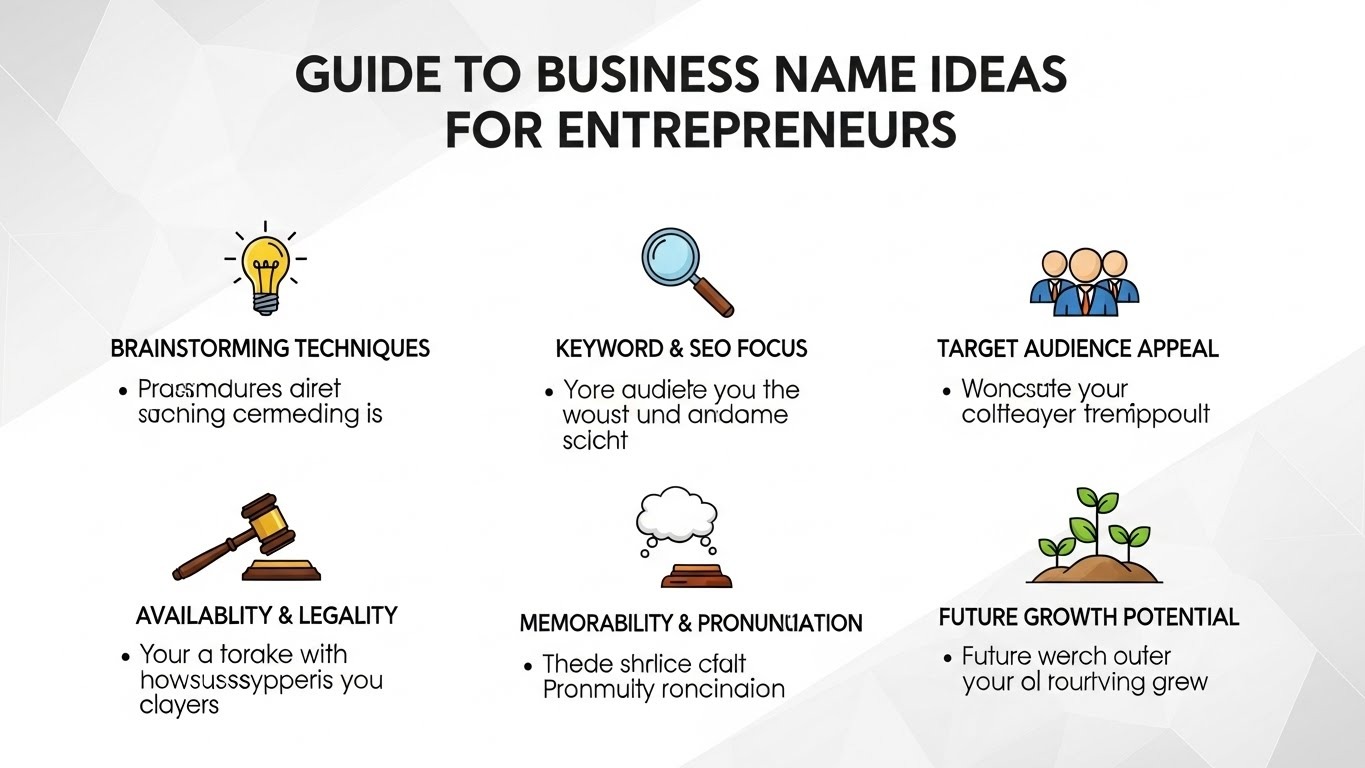
Legal and Availability Considerations
Before finalizing, verify availability to sidestep legal hurdles. Trademarks protect your intellectual property, preventing disputes that could halt operations. In the U.S., over 2 million trademarks are registered annually, so checking databases early is crucial. Company name ideas must also secure domain names and social handles; without them, your online presence suffers, potentially costing 25% of potential traffic.
Neglecting this step has sunk startups—consider cases where similar names led to lawsuits, draining resources. Always search state registries and global databases to confirm uniqueness.
Key Steps to Select Company Name Ideas Effectively
Brainstorming isn’t random; it’s a structured process that yields professional business name ideas rooted in your business essence. Start by listing words related to your industry, values, and target market. Tools like AI generators can spark creativity, but personalize them to reflect authenticity.
Brainstorming Techniques for Fresh Ideas
Begin with free association: jot down 50-100 words tied to your mission. For a eco-friendly apparel brand, words like “green,” “vital,” or “bloom” could inspire catchy business name examples such as “VitalThreads” or “BloomWear.” Use techniques like word blending—merging “eco” and “style” into “Ecostyle”—to create unique, pronounceable options.
Incorporate audience insights: survey potential customers on what resonates. This ensures your name appeals directly, enhancing SEO through natural keyword integration like “sustainable fashion brands.” Aim for brevity; names under 12 characters perform best in searches and logos.
Evaluating and Refining Your Options
Narrow your list by scoring names on criteria: memorability, relevance, and versatility. Test pronunciation across languages if global expansion is on the horizon—avoid complex spellings that confuse voice searches. Gather feedback from trusted peers to gauge appeal, focusing on emotional response over personal taste.
Refine by checking SEO potential: search for your top picks to see competition levels. Professional business name ideas that include subtle industry terms, like “TechForge” for software firms, can improve organic rankings without stuffing keywords.
Types of Professional Business Name Ideas to Inspire You
Diverse naming styles cater to different industries, from tech to retail. Understanding these helps tailor company name ideas to your niche, ensuring they convey professionalism while standing out.
Descriptive Names for Clarity
These directly highlight what you do, ideal for service-based startups. Examples include “FreshBake Bakery” or “QuickFix Plumbing,” which instantly inform customers and aid SEO by incorporating terms like “plumbing services.” They build trust through transparency but risk sounding generic if overused.
Pros: Easy to market and optimize for searches. Cons: Limit expansion if your offerings evolve. Use them when user intent prioritizes straightforward solutions.
Abstract and Invented Names for Uniqueness
Crafted from imagination, these evoke curiosity without literal ties. Think “Google” (playful nod to vast information) or “Zara” (invented for fashion flair). Catchy business name examples here shine in creative fields, allowing broad scalability.
They excel in branding but require heavy marketing to explain. For entrepreneurs, pair with taglines like “Innovate Daily” to clarify purpose, enhancing recall in competitive spaces.
Acronyms and Compound Words for Brevity
Acronyms like “IBM” (International Business Machines) condense complexity into punchy forms. Compound words, such as “Shopify,” blend concepts for memorability. These professional business name ideas suit tech and e-commerce, where brevity aids domain availability.
Ensure they roll off the tongue—test with focus groups. They often rank well in searches due to uniqueness, but avoid obscurity that alienates audiences.
Catchy Business Name Examples Across Industries
Real examples illustrate how to select company name ideas that thrive. In food, “SweetGreen” combines allure with health focus, driving a $1B+ valuation. For tech, “Slack” implies ease, revolutionizing communication tools.
Retail and E-Commerce Inspirations
Names like “Warby Parker” (nod to literary figures) blend whimsy with eyewear expertise, boosting direct-to-consumer sales. “Etsy” evokes a creative marketplace, perfect for handmade goods. These catchy business name examples leverage alliteration for stickiness, ideal for SEO-optimized shopping queries.
In fashion, “Revolve” suggests endless style options, capturing millennial shoppers. Entrepreneurs can adapt by fusing niche terms, like “PetPals” for accessories.
Tech and Service Sector Highlights
“Zoom” conveys speed for video calls, exploding during remote work booms. “HubSpot” implies a central marketing hub, aiding inbound strategies. Professional business name ideas here often use action words, improving click-through rates in search results.
For consulting, “MindfulMetrics” merges insight with data, appealing to analytics firms. Study these for patterns: short, evocative, and domain-friendly.
Creative and Lifestyle Brand Cases
In wellness, “Calm” app’s name mirrors its serenity promise, amassing millions of users. “Glossier” suggests glossy beauty, empowering user-generated content. Catchy business name examples like these foster community, key for lifestyle SEO.
For media, “BuzzFeed” captures viral energy, dominating content shares. Tailor to your vibe—energetic for startups, serene for wellness.
Common Mistakes to Avoid When Generating Company Name Ideas
Pitfalls can derail even brilliant concepts. Overly trendy names, like those mimicking fads, date quickly and harm longevity. Ignoring cultural sensitivities risks backlash; always global-check for unintended meanings.
Overlooking Scalability and Flexibility
Selecting a company name too niche-bound, such as “NYC Deli Supplies,” limits growth beyond location. Opt for versatile professional business name ideas that accommodate pivots, like Amazon’s evolution from books to everything.
Domain mismatches frustrate users—secure .com variants early. Also, skip legal oversights; unregistered names invite infringement claims.
Neglecting SEO and Digital Presence
Names without search-friendly elements struggle in visibility. Avoid keyword overload, but integrate naturally, as in “FreshFit Gym” for fitness queries. Test social availability; inconsistent handles confuse branding.
Finally, don’t rush—prototype logos and mock ads to visualize fit.
Legal Steps to Secure Your Selected Company Name
Once chosen, protect it rigorously. Register as a DBA (Doing Business As) for sole proprietors, or form an LLC for added liability shield. Trademark via USPTO ensures exclusivity, costing $250-350 per class.
Trademark and Registration Processes
Search USPTO databases first, then file—approval takes 6-12 months. International entrepreneurs should consider Madrid Protocol for multi-country coverage. Company name ideas must be distinctive; generic terms like “Coffee Shop” can’t be trademarked alone.
Post-registration, monitor for infringements using tools like Google Alerts.
Building a Strong Online Foundation
Claim domains via registrars like GoDaddy, prioritizing exact matches. Set up social profiles immediately to own your brand space. This SEO tactic funnels traffic, turning searches for “yourname services” into visits.
Integrate the name into all assets: website, packaging, emails—for cohesive identity.
In wrapping up, selecting a company name is your gateway to entrepreneurial triumph, blending creativity with strategy for lasting impact. With the insights here—from brainstorming professional business name ideas to vetting catchy business name examples—you’re equipped to craft a moniker that propels your venture forward. Take action now: brainstorm your top five options today, check availability, and start building the brand you’ve envisioned. Share your favorite company name ideas in the comments below—what’s the story behind your choice? Let’s inspire each other to create names that echo success!
FAQs
How do I select company name ideas that are unique?
Focus on originality by brainstorming with industry-specific words, then check trademark databases and domain availability to ensure no conflicts. Use AI tools for inspiration, but always refine for personal relevance to avoid generic choices.
What makes professional business name ideas effective?
They balance memorability, relevance, and scalability, often using alliteration or symbolism to convey trust and innovation. Effective names are easy to pronounce, spell, and adapt across marketing channels.
Can you provide catchy business name examples for a tech startup?
Sure—consider “Nexify” (blending next and simplify) or “CodeSpark” (evoking innovation). These are short, evocative, and SEO-friendly for tech searches.
Why is checking domain availability important when selecting a company name?
It secures your online identity, preventing lost traffic to competitors with similar domains. Aim for .com extensions to match user search habits and boost credibility.
How long should a company name be for optimal branding?
Keep it under 12 characters for easy recall and typing, as longer names dilute impact in logos, searches, and social media. Brevity enhances SEO without sacrificing meaning.
Related Topics: Data-Driven Marketing Hacks Every Business Should Use
Related Topics: Future of Remote Work Policies in the Tech Industry