


Every month, countless offices unknowingly pay for a refrigerator that works harder than necessary. The surprising truth is that one Energy-Efficient Refrigerator Office Electricity Savings strategy can reduce annual power costs without changing employee habits, office hours, or workflow. A modern low-power fridge uses significantly less electricity than older units while maintaining the same cooling performance, making it one of the easiest upgrades for reducing office utility expenses.
Electricity bills continue rising across commercial properties, and office kitchens often contain aging appliances that quietly consume power around the clock. Unlike computers or lights that turn off overnight, refrigerators run 24 hours a day, 365 days a year. That constant operation makes refrigeration one of the most important opportunities for energy savings.
An Energy Star refrigerator is specifically designed to reduce electricity consumption while maintaining food safety, temperature stability, and long-term reliability. Businesses seeking lower operating costs, improved sustainability metrics, and better workplace efficiency can benefit significantly from choosing the right office appliance.
This guide explains exactly how energy-efficient refrigerators reduce electricity costs, what features matter most, how much money businesses can save, and how to select the best model for office environments.
Why Does an Energy-Efficient Refrigerator Reduce Office Electricity Bills?
An energy-efficient refrigerator reduces electricity bills because it requires less power to maintain cooling temperatures throughout the day.
Traditional refrigerators often use outdated compressors, inefficient insulation, and older cooling systems. These components consume more energy every hour they operate. Modern energy-efficient units incorporate advanced compressor technology, better airflow management, thicker insulation, and smart temperature controls that minimize wasted electricity.
Businesses researching efficient workplace equipment often evaluate refrigeration alongside other productivity-enhancing investments such as ergonomic workstations. Resources discussing workspace upgrades that improve employee performance highlight how smart equipment choices can reduce operating costs while improving office functionality.
According to ENERGY STAR program estimates, certified refrigerators can use substantially less energy compared to standard models. Over several years of operation, those savings accumulate into meaningful reductions in utility expenses.
- Reduced compressor runtime
- Improved insulation efficiency
- Better temperature regulation
- Lower heat generation
- Optimized defrost cycles
- Smart energy management systems
Because refrigeration operates continuously, even small efficiency improvements create measurable annual savings.
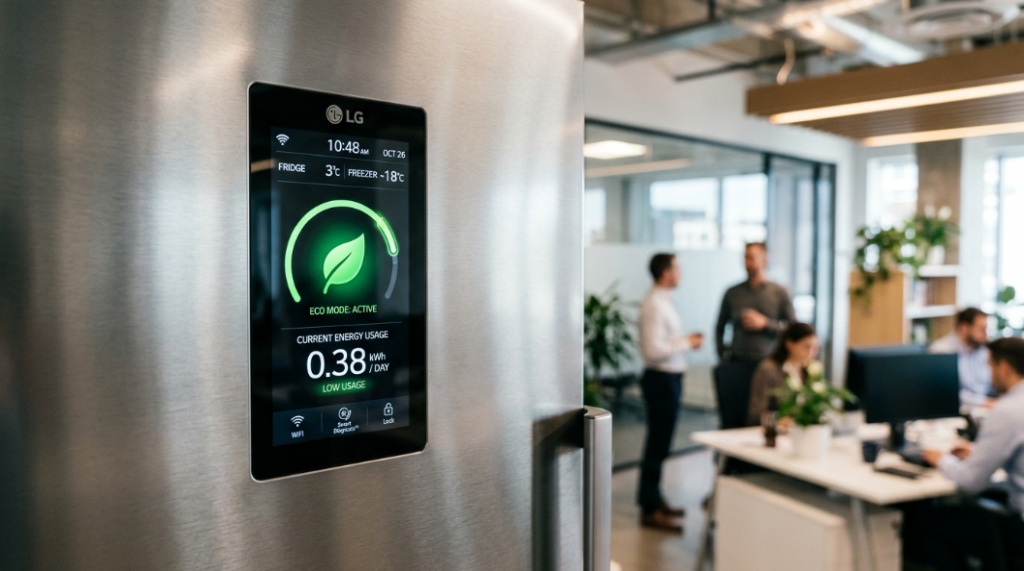
What Is a Low Power Fridge and Why Is It Important for Offices?
A low power fridge is a refrigerator specifically designed to consume minimal electricity while maintaining reliable cooling performance.
Office kitchens typically store beverages, lunches, dairy products, snacks, and shared food items. Unlike residential environments where refrigerator usage varies significantly, office refrigerators experience repeated door openings throughout working hours.
A low power fridge addresses this challenge through:
- Variable-speed compressors
- Efficient cooling circulation
- LED interior lighting
- Improved insulation materials
- Intelligent temperature sensors
Benefits for businesses include:
- Lower monthly utility expenses
- Reduced carbon footprint
- Improved appliance lifespan
- Less heat released into office spaces
- Better operational efficiency
Small offices, coworking spaces, law firms, agencies, healthcare clinics, and consulting businesses frequently benefit from compact low-energy refrigeration solutions.
How much electricity does a low power fridge use?
Many modern compact office refrigerators consume between 100 and 300 kWh annually, depending on size, features, and usage patterns. Older refrigerators may consume double that amount or more.
How Does an Energy Star Refrigerator Save More Energy Than Standard Models?
An Energy Star refrigerator saves energy by meeting strict efficiency standards established through certified testing and performance requirements.
ENERGY STAR certification identifies appliances that deliver superior energy performance compared to conventional alternatives. Manufacturers achieve certification through engineering improvements that reduce power consumption without sacrificing functionality.
Key technologies include:
- High-efficiency compressors
- Enhanced evaporator systems
- Advanced insulation technology
- Precision temperature controls
- Improved gasket sealing
- Energy-optimized fan motors
These innovations reduce unnecessary energy usage while maintaining consistent internal temperatures.
| Feature | Standard Refrigerator | Energy Star Refrigerator |
|---|---|---|
| Electricity Consumption | Higher | Lower |
| Compressor Efficiency | Basic | Advanced |
| Temperature Stability | Moderate | High |
| Operating Cost | Higher | Lower |
| Environmental Impact | Greater | Reduced |
| Long-Term Savings | Limited | Significant |
For businesses focused on sustainability goals, ENERGY STAR-certified equipment often supports environmental reporting and corporate responsibility initiatives.
Which Refrigerator Features Have the Biggest Impact on Energy Consumption?
The most important energy-saving refrigerator features are compressor efficiency, insulation quality, temperature control systems, and door sealing performance.
Not all refrigerators deliver equal efficiency. Understanding which features matter most helps businesses make smarter purchasing decisions.
Organizations increasingly prioritize transparent and responsible operational practices. Similar principles discussed in sustainable business supply-chain strategies apply when selecting energy-efficient workplace equipment that supports long-term environmental goals.
Variable-Speed Compressors
Traditional compressors operate using simple on/off cycles. Variable-speed compressors adjust output according to cooling demand, reducing unnecessary electricity use.
High-Performance Insulation
Superior insulation prevents cold air loss and reduces cooling workload.
LED Lighting
LED lights consume less energy and generate less heat compared with conventional bulbs.
Digital Temperature Controls
Precise controls maintain optimal temperatures without excessive cooling cycles.
Quality Door Seals
Tight door gaskets prevent warm air infiltration that forces compressors to work harder.
How Much Money Can Offices Save With an Energy-Efficient Refrigerator?
Many offices can reduce refrigeration-related electricity costs by 10% to 40% depending on appliance age, size, efficiency rating, and operating conditions.
Actual savings vary according to:
- Local electricity rates
- Refrigerator size
- Usage frequency
- Office occupancy levels
- Climate conditions
- Maintenance practices
Consider a workplace replacing a 12-year-old refrigerator with a modern Energy Star refrigerator.
| Scenario | Older Unit | Energy-Efficient Unit |
|---|---|---|
| Annual Energy Use | 700 kWh | 350 kWh |
| Annual Electricity Cost | Higher | Lower |
| Five-Year Operating Cost | Significant | Reduced |
| Environmental Impact | Higher Emissions | Lower Emissions |
Over several years, energy savings often offset a substantial portion of the purchase price.
Are savings greater in larger offices?
Yes. Offices with multiple refrigerators, high employee counts, and extended operating hours generally experience larger cumulative savings.
What Refrigerator Size Works Best for Different Office Types?
The ideal refrigerator size depends on employee count, storage requirements, available space, and usage frequency.
| Office Size | Recommended Capacity | Best Application |
|---|---|---|
| 1–10 Employees | 1.7–4.5 Cubic Feet | Small Teams |
| 10–25 Employees | 5–10 Cubic Feet | Growing Offices |
| 25–50 Employees | 10–18 Cubic Feet | Medium Businesses |
| 50+ Employees | 18+ Cubic Feet | Large Organizations |
Oversized refrigerators waste energy when storage capacity remains underutilized. Selecting appropriately sized equipment maximizes efficiency.
Businesses seeking compact options can explore small office refrigerator recommendations for workplace environments to identify space-efficient models that balance capacity and energy performance.
What Maintenance Practices Keep Refrigerator Energy Use Low?
Routine maintenance preserves efficiency and prevents unnecessary electricity consumption.
Even the most efficient refrigerator can lose performance if neglected.
Clean Condenser Coils Regularly
Dust buildup restricts heat dissipation and forces compressors to run longer.
Inspect Door Seals
Damaged gaskets allow cold air leakage and increase power consumption.
Maintain Proper Temperature Settings
Recommended refrigerator temperature remains around 37°F (3°C).
Avoid Overloading
Blocked airflow reduces cooling efficiency.
Minimize Door Opening Frequency
Repeated openings introduce warm air and increase compressor workload.
Allow Air Circulation
Provide adequate ventilation space around refrigerator sides and rear panels.
Should Offices Replace an Older Refrigerator Immediately?

If a refrigerator is more than 10 years old and consumes excessive electricity, replacement often delivers better long-term value than continued operation.
Warning signs include:
- Frequent repairs
- Rising electricity costs
- Temperature fluctuations
- Excessive compressor noise
- Visible gasket deterioration
- Ice accumulation problems
Modern refrigeration technology offers substantial efficiency improvements over equipment manufactured a decade ago.
Businesses should compare:
- Annual operating costs
- Repair expenses
- Replacement investment
- Expected energy savings
- Warranty coverage
When energy savings and reduced maintenance expenses are combined, upgrading frequently becomes financially beneficial.
Conclusion: Is an Energy-Efficient Refrigerator Worth the Investment?
Yes. An energy-efficient refrigerator is one of the most practical upgrades for reducing office electricity expenses. Because refrigeration operates continuously, every efficiency improvement translates directly into lower utility costs year after year.
A quality low power fridge equipped with advanced insulation, smart temperature controls, efficient compressors, and ENERGY STAR certification can significantly reduce energy consumption while improving workplace convenience. Businesses that select appropriately sized equipment, perform regular maintenance, and prioritize long-term efficiency often achieve measurable cost reductions and sustainability benefits.
Whether managing a startup, professional office, coworking facility, healthcare practice, or corporate workspace, investing in an Energy Star refrigerator creates ongoing operational savings. Organizations exploring broader workplace optimization strategies can also benefit from reviewing modern approaches to productive office equipment planning that enhance efficiency across multiple business functions.
Evaluate current refrigeration costs, compare energy ratings carefully, and choose a model designed for workplace demands. Lower electricity bills start with smarter appliance decisions.
Frequently Asked Questions
Does an Energy Star refrigerator really save money?
Yes. An Energy Star refrigerator uses less electricity than many standard models, reducing annual operating costs while maintaining reliable cooling performance.
What is considered a low power fridge?
A low power fridge is a refrigerator engineered to consume minimal electricity through efficient compressors, insulation systems, and temperature management technology.
How long does an office refrigerator typically last?
Most office refrigerators last between 10 and 15 years when properly maintained. Energy efficiency may decline as equipment ages.
What refrigerator temperature is best for office food storage?
Approximately 37°F (3°C) provides safe food storage while supporting efficient refrigerator operation.
Can a refrigerator increase office air-conditioning costs?
Yes. Inefficient refrigerators generate additional heat, forcing cooling systems to work harder and increasing overall energy consumption.
Should small offices buy compact refrigerators?
Yes. Compact refrigerators often provide sufficient storage capacity while consuming less electricity and occupying less floor space.
How often should refrigerator coils be cleaned?
Condenser coils should generally be cleaned every six months to maintain optimal efficiency and prevent excess compressor workload.